Latest Posts

Changing Employment Contracts: Why Fire and Rehire Is Becoming Higher Risk
Many employers are reviewing employment contracts due to changing business needs. Pay and commission structures, benefits, working patterns, hybrid arrangements, locations, bonuses, expenses, shift patterns and role responsibilities can often become pressure points for businesses requiring contract variation.
There may be good business reasons for change. However, where employees do not agree to changing employment contract terms, the legal route to introduce changes can be more difficult and from January 2027, fire and rehire, or dismissal and re-engagement, is becoming a much higher-risk option.
What is fire and rehire?
Fire and rehire describes a situation where an employer dismisses an employee from their existing contract and offers to re-engage them on new contractual terms.
This often becomes necessary where the employer has been unable to obtain agreement to proposed contractual changes from the employee.
At present, fire and rehire it is not automatically unlawful in every case. However, it has always carried some risk because it involves dismissal. Employers who fire and rehire may face unfair dismissal claims, breach of collective consultation obligations and reputational damage.
Why is the risk increasing?
From January 2027, the Employment Rights Act 2025 significantly narrows the use of fire and rehire by making dismissals automatically unfair unless the employer can show financial difficulties and that the contractual change was unavoidable.
The details are being are being finalised by the government but the direction is clear. Employers will need to show more than a preference for the new terms. They will need evidence of the business need, proper consultation and genuine consideration of alternatives.
Where employers get caught out
In addition to the genuine business need requirements above, the process is critical and often, the employer’s vulnerability starts well before dismissal is even considered.
A business decides that a change is commercially necessary. A timetable is set. Communications are prepared. The desired outcome is already clear.
Employees are then asked to agree.
If consultation is treated as a route to securing acceptance rather than a genuine opportunity to understand concerns and explore alternatives, the process becomes vulnerable.
The key question is not simply whether the employer wanted the change. It is whether the employer can show that the process was fair, evidence-based and genuinely open to consideration of alternatives which were then properly evaluated.
Common contract changes that may create risk
Employers should take particular care where changes affect core terms, including:
- pay or commission;
- bonus arrangements;
- pension or benefits;
- working hours;
- shift patterns;
- place of work or mobility requirements;
- hybrid or remote working arrangements;
- duties, responsibilities or reporting lines;
- expenses or allowances.
These are often commercially important, but they are also the changes most likely to be resisted by employees.
What should employers do before changing terms?
Before proposing contractual changes, employers should consider:
- What is the business reason for the change?
- Is there financial evidence supporting the need for change?
- Which contractual terms are affected?
- Is employee agreement required?
- Is there an existing variation, flexibility or mobility clause that may apply?
- Who should be consulted, and when should this begin?
- Are there alternative to avoid the proposed change?
- Could the change have a discriminatory impact?
- Will collective consultation obligations be triggered?
- What is the reputational risk if dismissal and re-engagement is proposed?
In practice, the employers best placed to defend a change are those that have prepared properly before announcing it.
Employers should not assume that a broadly drafted variation clause permits any change.
Why manager training matters
Contract variation exercises are often undermined by inconsistent messages.
One manager may suggest the change is optional. Another may say it is inevitable. A senior leader may imply that refusal will lead to dismissal before consultation has run its course.
Managers involved in communicating contractual changes should understand the process, the limits of what they can say and the importance of avoiding premature conclusions.
How Quastels can help
Quastels advises employers on employment contracts, contract variation, consultation, dismissal and re-engagement, collective consultation, unfair dismissal risk and employment disputes.
We help businesses plan and implement contractual changes in a way that is commercially realistic and legally defensible.
Please contact Dipti Shah in Quastels’ Employment Team if you are considering changes to employment contracts or want to review your approach before the January 2027 changes take effect.
Read More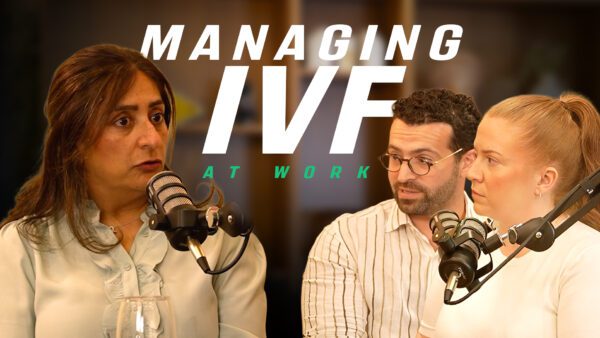
More Than a Policy: Supporting Employees Through IVF
For many people, IVF is one of the most physically demanding and emotionally complex experiences they will ever go through. Yet for many, it remains a journey that is largely invisible to those around them, including their employer.
Appointments can be arranged at short notice. Treatment can have significant physical side effects. The emotional impact of uncertainty, hope and disappointment can be difficult to carry alongside the demands of a working day. Deciding whether to tell colleagues or managers about treatment can bring an additional layer of anxiety.
As more people undergo fertility treatment, employers have an increasingly important role to play in creating workplaces where employees feel supported rather than isolated.
To mark World IVF Day, Employment Partner Dipti Shah sat down with colleagues Ben Rosen and Hayley Lawrence for an open and honest conversation about their experiences of IVF and the practical ways employers can better support people undergoing treatment.
The challenges employees face
Throughout the discussion, Ben and Hayley speak candidly about the realities of IVF. While every journey is different, they reflect on many of the challenges shared by people undergoing fertility treatment, including:
- Managing frequent and often unpredictable medical appointments.
- Coping with the physical side effects of medication and treatment.
- The emotional impact of uncertainty, setbacks and loss.
- Deciding whether to disclose treatment to an employer or colleagues.
- Balancing professional responsibilities with an intensely personal experience.
These are challenges that are often hidden from view, making understanding and empathy in the workplace all the more important.
What can employers do?
From an employment law perspective, Dipti explores the practical steps organisations can take to better support employees during fertility treatment.
While there is no single approach that works for every individual, creating an environment where people feel comfortable having conversations about fertility can make a significant difference.
The discussion considers:
- Creating a workplace culture where employees feel able to speak openly if they choose to.
- Training managers to respond with empathy and understanding.
- Offering flexibility around appointments where possible.
- Considering fertility policies and wider wellbeing initiatives.
- Recognising that support is not only about legal compliance, but about building a compassionate workplace culture.
Why these conversations matter
Many people undergoing IVF continue working throughout treatment without those around them ever knowing what they are experiencing.
By increasing awareness and encouraging open conversations, employers can help reduce stigma and ensure employees feel supported during one of the most challenging periods of their lives.
We are incredibly grateful to Ben and Hayley for sharing their personal experiences so openly. Their honesty helps shine a light on an experience that affects countless individuals and families, but is still rarely discussed in the workplace.
Read More
Quastels Advises £80m-turnover Rev Corp Ltd on sale of business and assets to Winvia Entertainment
Quastels has advised Rev Corp Ltd (“Rev Comps“) on the sale of its business and assets to Winvia Entertainment (“Winvia“), a technology-led entertainment group.
Rev comps is a digitally-driven UK prize competition platform which has build a strong reputation in its market, underpinned by a highly engaged customer base and consistent commercial performance. The transaction represents a significant milestone for the business, enabling it to benefit from Winvia’s proprietary technology and broader growth platform.
Under the agreement, Winvia will pay £11.8m in cash in three instalments. Following completion, key members of the Rev Comps team are expected to remain involved in the business, supporting continuity and future development as part of the Winvia group.
Quastels advised Rev Corp Ltd on all legal aspects of the transaction. The team was led by Ben Gale (Partner, Corporate), and supported by Charlotte Vallins (Partner, Commercial Real Estate), Ann-Maree Blake (Legal Director, Commercial), Jamie Crocker (Solicitor, Corporate), Ramona Bakshi (Solicitor, Employment), Patrick Higgins (Solicitor, Employment) and Imogen Burrows (Trainee, Corporate).
Gerald Edelman acted as corporate finance advisers to Rev Corp Ltd.
Comment
“We are delighted to have supported Rev Corp Ltd on the agreed sale of its business and assets to Winvia. Rev Comps has built a strong platform with an engaged customer base and a compelling position in a fast-evolving sector. The transaction reflects the quality of the business and provides a clear pathway for its next stage of development. It was a pleasure working alongside the Rev Comps team and Gerald Edelman to successfully agree the transaction and we look forward to working with the parties through to a successful completion.”
– Ben Gale, Corporate
Client Testimonial
“Quastels – an incredibly efficient and personable law firm with a team that’s second to none.
I clicked with Ben and the team from our very first introductory call. This wasn’t your tyrpical lawyers’ meeting filled with cryptic lawyer jargon, it was approachable, clear and refreshingly straightforward. Ben and the team were relatable and easy to talk to. We discussed the deal in detail, but what really stood out was the ability to have light-hearted conversations alongside the more serious aspects – that’s what really set Quastels apart for me.
The beauty of this whole experience was Quastels’ ability to cater to our needs. I hate back-to-back phone calls and endless meetings. Ben realised this early, and we quickly established a straightforward and modern way of working. The flexibility and responsiveness set Quastels apart form my previous experiences with lawyers.
We were able to exchange on the deal in record time, and I firmly believe this was not only due to the fantastic team at Quastels, but also the speed and efficiency of communication.
Both sides needed to get the deal over the line quickly for various reasons, and when it came to meeting that deadline, the team went above and beyond, working all hours to get it done. I was receiving updates from Ben at 3.30am on Sunday morning, the evening of exchange, a clear reflection of his commitment and work ethic.
Ben is someone you can rely on to knuckle down and make it count when everything is on the line. Quick replies to any questions and an attitude to work that is rare in the current world, Ben and the team really did look after us exceptionally well and we’ve had some laughs along the way too.
I wouldn’t hesitate to use Quastels again. They have been superb from start to finish and will be my go-to firm for any future legal work.
Thank you for helping make this deal happen, for protecting our position throughout and for the fantastic service, advice and professionalism (with some light-hearted banter mixed in with it) from start to finish. I can’t say enough good things about you all.”
– Robert Savage
To find out more about how we can assist on deals in the Prize Competition sector, see this recent article by Ben Gale, Corporate Partner: From Prize Draw to Prize Deal: Selling an Online Prize Competition Business.
Read More