
An employee returns to work after surgery for endometriosis. She is ambitious, engaged and wants to progress. From the outside, she appears to be coping.
But what should an employer do when endometriosis continues to affect an employee’s ability to work?
The Employment Appeal Tribunal decision in Pal v Accenture (UK) Ltd raises important questions about endometriosis at work, disability under the Equality Act 2010 and reasonable adjustments — particularly where symptoms fluctuate or an employee is masking their impact.
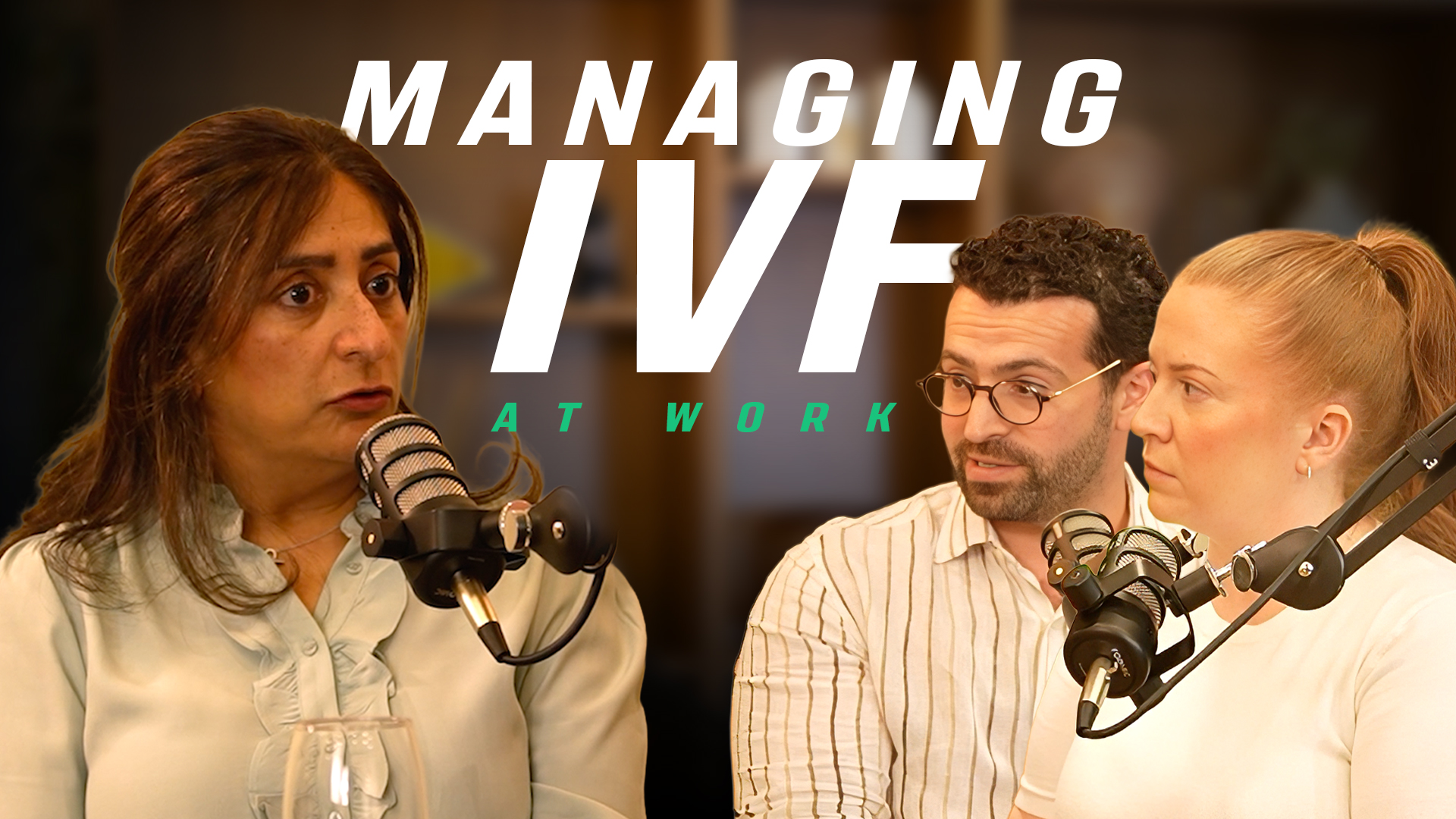
In our latest podcast, we spoke to Sanju Pal about her experience and barrister Elaine Banton, who represented her in the appeal. Their discussion produced a simple but useful framework for employers: Ask. Assess. Adjust.
Endometriosis at Work: coping can disguise the real impact
Sanju described a conflict many employees with chronic health conditions will recognise. She was ambitious and wanted to progress, but she did not want her health to define what she could contribute.
So she pushed through.
At one stage she was performing well while working from home, but privately managing significant fatigue by taking naps during the day. She described the difficulty of providing medical evidence while simultaneously wanting to reassure her employer: I am struggling, but I can still do my job.
That is an important distinction for employers.
An employee may minimise symptoms because they fear being viewed as less capable, unreliable or no longer suitable for progression. Good performance does not necessarily mean good health.
Where an employer knows about surgery, recurring symptoms, sickness absence or occupational health involvement, the response should be curiosity rather than assumption.
Reasonable adjustments must address the actual disadvantage
Reasonable adjustments are sometimes approached as a checklist: working from home, reduced travel, different hours or a phased return.
Those measures can help. But an adjustment only works if it addresses the disadvantage the employee is actually experiencing.
If someone returns on reduced hours but remains measured against an unchanged performance target, has the disadvantage really been removed?
If travel is restricted but career progression depends on opportunities the employee can no longer access, what happens next?
Depending on the individual, adjustments might include flexible hours or location, reduced travel, additional breaks, temporary changes to duties or targets, access to rest facilities or further occupational health input.
The exercise should start with the individual, not the policy. What is making it harder for this person to perform, progress or remain in work, and what could reasonably change?
A disability policy is only the starting point
Pal v Accenture also illustrates why having the right policy is not enough.
The Employment Appeal Tribunal found that the original tribunal had not properly analysed whether Sanju was disabled by reason of her endometriosis. In particular, the evidence about the impact of the condition, treatment and the possibility of recurring symptoms required fuller consideration.
The disability and related discrimination issues were sent back to a differently constituted Employment Tribunal for fresh determination.
The case therefore does not establish that endometriosis automatically amounts to a disability under the Equality Act. The question remains fact-specific.
That distinction matters because fluctuating conditions do not necessarily affect somebody in the same way every day. An employee may have periods when they appear well or perform normally, followed by periods when symptoms significantly affect their day-to-day activities.
Managers need to understand that distinction before absence, performance or capability concerns move towards formal action.
Ask. Assess. Adjust.
Elaine’s three-stage approach provides a useful practical test.
Ask. Speak to the employee. Ask what they are experiencing, what has changed and what is making work difficult. Do not assume that because somebody is coping, they do not need support.
Assess. Consider the medical evidence, occupational health advice, absence history, role requirements and performance measures. Then challenge the organisation’s own assumptions. Does this target have to operate in this way? Is the timeframe fixed? Is another approach available?
Adjust. Identify what could reasonably remove or reduce the disadvantage and keep it under review. A fluctuating condition may require a flexible response rather than a one-off solution.
There is a commercial point too. Businesses invest significant time and money recruiting, training and developing people. Before an experienced employee is managed out, it makes sense to establish whether a reasonable adjustment could retain valuable talent.
As Elaine put it during our discussion, if a business has invested years in an individual, why would it not at least explore how that person might be retained?
Is endometriosis a disability under the Equality Act?
Endometriosis is not automatically treated as a disability under the Equality Act 2010. It can, however, amount to a disability where its impact on the individual satisfies the statutory test.
That is one reason Sanju is campaigning for gynaecological conditions including endometriosis, adenomyosis, fibroids, PCOS, PMDD, menopause and menstrual disorders to be expressly recognised within the Equality Act guidance as examples of conditions with fluctuating or recurring effects.
Whatever happens to that campaign, employers do not need to wait for the guidance to change before acting.
They can ask the right questions now. They can look beyond the diagnosis and understand the actual impact on the individual. And they can test whether existing policies, targets or working arrangements can reasonably adapt.
Perhaps the simplest lesson from Sanju’s experience is this:
Do not wait for an employee to stop coping before you start asking questions.