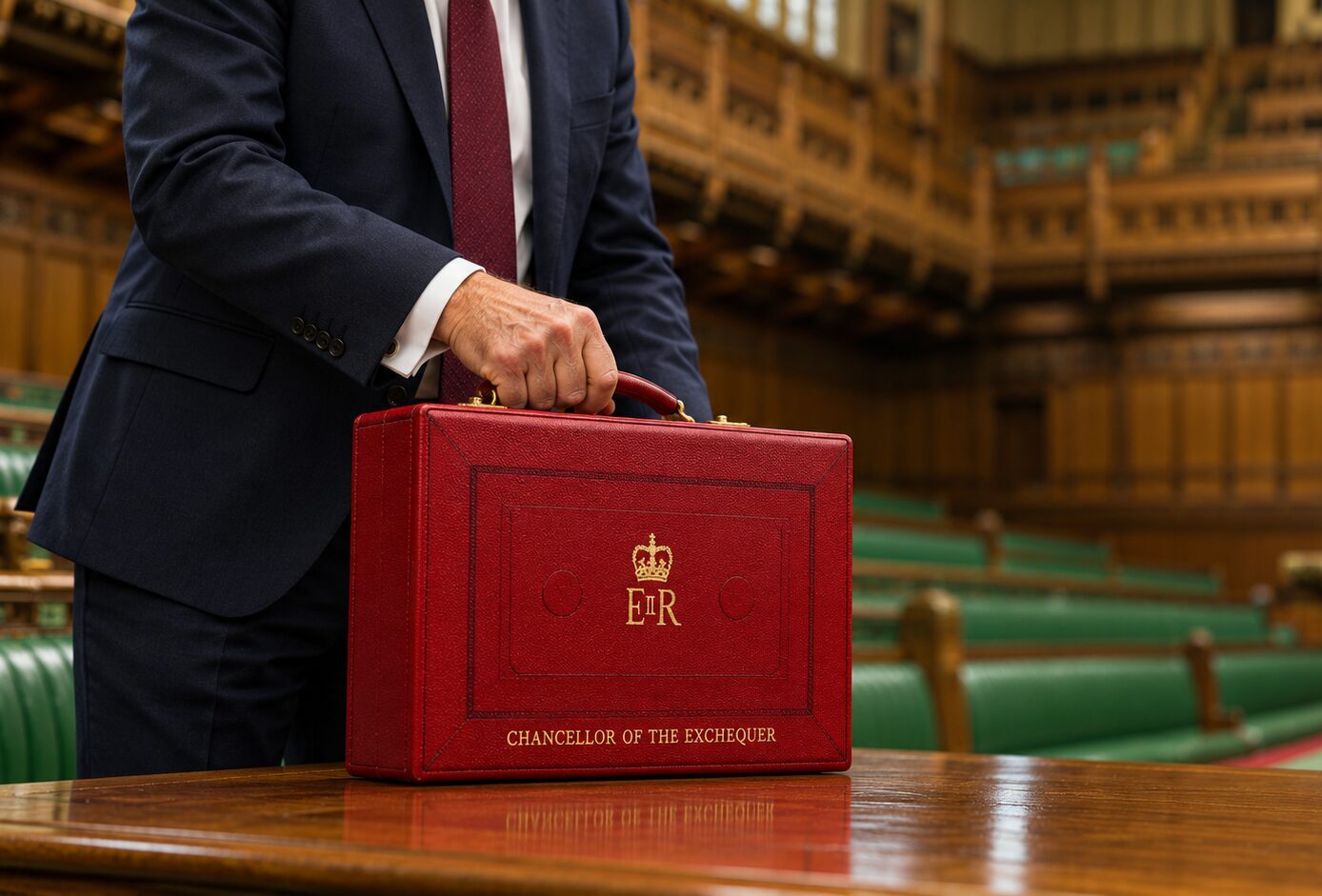
In a sense, Budget 2026 felt like déjà vu. Just like last year, we were all waiting to see what a relatively new Labour PM and Chancellor had planned. However, we thankfully avoided this year the months of damaging leaks and counter-leaks that characterised the build-up to Budget 2025. We’ve also seen far less of a change to the overall tax burden. Instead, we’ve got a Budget that has mostly confined itself to fairly technical changes.
Some of these changes simply resolve unintended inconsistencies, like the change to SDLT Group Relief. Other changes will provide a very welcome solution for those affected, such as the tax credit for UK resident members of LLCs and other ‘reverse hybrid’ entities, and the disapplication of Capital Gains Tax exit charges on trusts temporarily becoming UK resident. We’ve got a tax rise on savings and property income, and on banks, but also welcome news of a preserved Cash ISA allowance and an increase in the Trading Allowance for small trading and miscellaneous income.
The Chancellor has bought himself some time for now, but the economic growth the government so badly wants is going to require something else. Maybe we’ll see the start of that in the upcoming UK/EU negotiations, or in the 10 Year Plan it has promised to set out before next year’s spending review. We’ll wait and see.
For now, if you would like to discuss any of the announcements from the Budget with the Private Wealth and Tax team at Quastels, please get in touch.
Income Tax Rates on Property and Savings Income
What’s changing? Tax rates on property and savings income
How’s it changing? Last year’s Budget had already scheduled an increase from April 2027 in the rates of tax charged on savings and property income by 2%. This Budget increased that by a further 2%, so that from April 2027 the rates of tax charged on savings and property income will increase by a total of 4% from current rates. The new rates will therefore be 24% (basic rate), 44% (higher rate) and 49% (additional rate).
Who’s affected? Anyone receiving income from property rentals, or with savings income above their Personal Savings Allowance.
Founders’ Relief
What’s changing? Introduction of a new Capital Gains Tax (CGT) relief
How’s it changing? The government has announced that a new CGT relief will be introduced from 6 April 2027, known as Founders’ Relief. This will allow for a 10% rate of CGT on qualifying disposals, up to a lifetime cap of £10 million. While superficially similar to Entrepreneurs’ Relief in its heyday, Founders’ Relief will come with much stricter conditions.
For the individual, this includes five years of tax residence in the UK, and having held 25% of the ordinary share capital from when trade commenced, for at least give years. For the company, the conditions include paying UK Corporation Tax for five years and being engaged in a qualifying trading business, which here does not include dealing in land, financial services or property development, which must be the same trade for which it was originally established. It must also have turnover of at least £10 million and at least 15 qualifying full time employees in the year prior to disposal. Furthermore, the company will also need to meet a further conditions linked to growth.
Who’s affected? Individuals who have owned a 25% stake in a growing UK company from its foundation, who wish to dispose of their shares.
Business Asset Disposal Relief Cut

What’s changing? Lifetime limit for Business Asset Disposal Relief (BADR)
How’s it changing? BADR, formerly Entrepreneur’s Relief, is a relief from CGT on the disposal of a qualifying business interest. It is already a shadow of its former self, with the lifetime limit (the total value of gain on which the relief can be claimed) reducing from £10 million to £1 million in 2020, and the reduced rate of tax having been increased from 10% to 18% over the last couple of years. Now, the lifetime limit it to be cut still further, to £500,000. The government has made clear that it wants to much more narrowly target CGT relief for business owners, through the new Founders’ Relief.
Who’s affected? Individuals disposing of an interest in a business.
Double Taxation of LLCs and Other ‘Reverse Hybrids’

What’s changing? Taxation of individuals owning certain foreign corporate structures
How’s it changing? At present, there are difficulties in the taxation of ‘reverse hybrids’. These are entities that are treated as transparent in the jurisdiction where they are established (meaning tax is not charged on the entity itself, but on its members, like an English partnership or LLP) but opaque in another jurisdiction like the UK (meaning tax is charged on the entity). Common examples are US LLCs, as well as US S-Corps, Jersey LLCs, and Frech SCIs.
The disconnect in tax treatment can result in high effective rates of tax, without Double Tax Treaties being able to provide much assistance. For example a UK resident member of a US LLC might be subject to US federal income tax at up to 37% on the profits, but then also UK income tax at dividend rates of up to 39.35% when profits are distributed to them.
The government consulted on possible solutions to this problem, and as part of Budget 2026 published its response. This confirms that it will be pursuing a solution based on providing a credit for the foreign tax paid on underlying profits, which can be deducted from the individual’s UK income tax on distributions.
Who’s affected? UK resident individuals who are members of a foreign ‘reverse hybrid’ entity.
More Timely Payments for Self Assessment
What’s changing? When Income Tax payments must be made
How’s it changing? Following a consultation on this issue, the government has announced that by default taxpayers will be required to make automated in-year payments of their Income Tax bills (such as through Direct Debit), unless they opt into payments being deducted through PAYE. This will also apply to taxpayers liable to make payments on account of tax.
Who’s affected? Individuals with a UK Income Tax liability.
Capital Gains Tax Exit Charge Easement for Temporarily Migrated Trusts
What’s changing? Relief from the exit charge applied where a trust becomes non-UK resident.
How’s it changing? An exit charge is payable by trusts that cease to be UK tax resident, by way of a Capital Gains Tax charged based on a deemed disposal. The government will legislate in Finance Bill 2026-27 to remove the exit charge where a trust ceases to be resident in the UK, when a trust becomes UK resident because a trustee moves to the UK, then ceases to be UK resident in the same or following year. The easement takes effect from 28 October 2026.
Who’s affected? Trusts whose UK residence arises from a trustee moving to the UK for a short period.
CGT on Gifts of Business Assets

What’s changing? Capital Gains Tax gift holdover relief for business assets
How’s it changing? From 6 April 2027, the formula limiting gift holdover relief on gifts of qualifying shares or securities will be updated to account for assets covered by the intangible fixed assets regime or eligible for the substantial shareholding exemption. Announced at Budget 2025, the change will be contained in Finance Bill 2026-27.
Gift holdover relief allows some or all of the Capital Gains Tax arising on a qualifying gift to be deferred. For shares in trading companies or holding companies of trading groups, relief can be restricted where the company or group holds assets not used in its trade. Including IFA and SSE assets in this calculation will remove distortions that can cause shareholders in otherwise similar companies to receive different amounts of relief.
Who’s affected? Those gifting qualifying shares or securities and claiming gift holdover relief.
ISA Retention at £20,000

What’s changing? Cash ISA limit no longer being cut from £20,000
How’s it changing? This measure reverses the previously announced reduction in Cash ISA limit from £20,000 to £12,000 for individuals under 65, that was announced in the Autumn budget last year. Individuals will still be able to utilise Cash ISAs up to the £20,000 limit each tax year.
Who’s affected? Individuals wanting to make further savings into cash ISAs.
Cultural Gift Scheme

What’s changing? Cultural Gift Scheme
How’s it changing? The Cultural Gift Scheme allows UK taxpayers to donate important art works or historical artefacts to be held for the benefit of the public in exchange for a tax credit equal to 30% of the item’s value for individuals and 20% for companies. The donor will agree with HMRC how the tax credit will be used in the five years following the donation. From 6 April 2027, jointly owned property can be gifted under this scheme. The relief available to each joint owner will be based on their own beneficial entitlement to the donated item.
Who’s affected? Donors holding jointly owned property will now be able to benefit from this scheme.
Mansion Tax

What’s changing? The High Value Council Tax Surcharge
How’s it changing? Following a consultation which completed this summer, the government has set out how the High Value Council Tax Surcharge (also known as the Mansion Tax) will apply. As announced in the 2025 Budget, an annual charge will be applied on residential properties worth more than £2 million from March 2028.
Payment of the tax can be deferred to the eventual sale or transfer of the property where the property owner has an annual household income of £35,000 or less, savings of £16,000 or less or meets disability criteria. Exemptions and discounts apply to certain types of housing such as working farmhouses and registered social housing. A 100% premium will be applied where properties are left unoccupied or unfurnished for over a year.
Qualifying properties will be valued as at April 2026 and allocated to the appropriate band. Revaluations will take place every 5 years.
Who’s affected? Owners of residential properties holding a value of at least £2 million in April 2026 will be hit by the charge from March 2028.
Securities Transfer Tax
What’s changing? Stamp Duty and Stamp Duty Reserve Tax
How’s it changing? The government is introducing the Securities Transfer Tax which will replace Stamp Duty and Stamp Duty Reserve Tax from late 2027. Stamp Duty and Stamp Duty Reserve Tax are currently levied against share transactions at a rate of 0.5% of the value of the shares transferred/purchased. This change is being made in an effort to simplify the current tax framework for these transactions.
Who’s affected? Taxpayers purchasing shares from late 2027 will pay Securities Transfer Tax rather than Stamp Duty or Stamp Duty Reserve Tax.
SDLT Group Relief
What’s changing? Group Relief for Stamp Duty Land Tax (SDLT).
How’s it changing? SDLT Group Relief allows companies to transfer shares and UK property between companies if they are part of the same group without triggering a SDLT charge. Under previous rules, this relief was clawed back if both companies which were party to the transaction ceased to be part of the same group within three years of the transfer meaning that any SDLT payable would then fall due (plus interest charges). The only exemption to this claw back was if the reason for the companies no longer forming part of the same group was due to the vendor being wound up within the three-year time period. This allowed a third party to acquire the shares without having to pay SDLT. With effect from 29 October 2026, the government has made changes to stop this by ensuring that the winding up of the vendor does prevent the claw back of the relief.
Who’s affected? Companies under a group structure should consider this when transferring assets within the group.
Reform of the Foreign Permanent Establishment Exemption
What’s changing? The Foreign Permanent Establishment Exemption for Corporation Tax.
How’s it changing? Where a UK resident company has a permanent establishment (either a fixed place of business or agent acting on behalf of the company) which is abroad, the profits made by the permanent establishment could previously be exempt from Corporation Tax charges if the appropriate election was made. Under the new rules this exemption will be mandatory so companies will not be able to carry the losses of the foreign permanent establishment forward to set against their UK tax liability.
Who’s affected? This will affect UK resident companies with foreign permanent establishments for accounting periods beginning on or after 1 January 2027.
Increased Trading Allowance
What’s changing? Income Tax on trading and miscellaneous income
How’s it changing? Trading Allowance is set to increase from April 2027, from £1,000 to £3,000. This increased threshold will also apply to Income Tax Self-Assessment returns. Although small in terms of significance on a wider scale, this reinforces one of the Chancellor’s overarching themes, of supporting and encouraging entrepreneurial spirit by reducing the necessary admin.
Who’s affected? Individuals with trading or miscellaneous income, such as freelancers.
Rise in Bank Surcharge
What’s changing? Corporation Tax paid by banks
How’s it changing? Banks will face a (temporary) increase in their Corporation Tax rates, with the Bank Corporation Tax Surcharge rising from 3% to 6% for a limited window between 1 January 2027 until 31 March 2028. Despite this increase, many banks will have taken a sigh of relief, having previously speculated an increase to a 8% surcharge. In terms of wider impact, some analysts have suggested that small, if not negligible, changes may be seen in certain financial products offered by banks as a way of recouping these losses. However, given the lower rate and the comparatively short timeframe involved, banks may decide not to be too greedy.
Who’s affected? Banks, with possible indirect impact on those seeking loans and mortgages.
CGT Returns on Disposals of UK Land

What’s changing? Capital Gains Tax, including penalties
How’s it changing? Where a UK residential property disposal has not been reported within the 60-day statutory deadline, and a subsequent Self-Assessment reporting the disposal is submitted, the late filing penalty imposed will be limited to that date.
Who’s affected? Individuals, trustees and executors disposing of UK residential property.
Promoters of Tax Avoidance
What’s changing? The Promoters of Tax Avoidance Scheme
How’s it changing? The onslaught of ‘financial and tax advice’ that has littered the internet over recent years is about to be subject to greater scrutiny, through including greater powers under the Promoters of Tax Avoidance Scheme (POTAS). Currently, this Scheme allows HMRC to issue various notices to promoters, to effectively stop them from promoting such arrangements and to comply with certain conditions. The Government is now planning to introduce VAT and indirect taxes into POTAS, allowing the details of more schemes to be published through notices. The Disclosure of Tax Avoidance Scheme – POTAS’s counterpart scheme known as DOTAS – also allows HMRC to issue civil penalties to promoters for non-compliance.
Who’s affected? Those who are seeking professional advice or who suspect that they have been sold an arrangement that is ‘too good to be true’…
Cryptoasset Tax Reform

What’s changing? Taxation of cryptoassets
How’s it changing? The government confirmed it intended to proceed with the draft legislation published in July, which makes specific changes to how cryptoasset loans and liquidity pools are taxed and provides Capital Gains Tax exemption for certain stablecoins.
Who’s affected? Those who are lending or staking cryptoassets, or making use of stablecoins.
Changes to the Seed Enterprise Investment Scheme (SEIS), Enterprise Investment Scheme (EIS) and Venture Capital Trusts (VCTs)
What’s changing? Tax advantaged investment schemes.
How’s it changing? Against the backdrop of the Chancellor’s push to encourage investing, his proposed changes are intended to simplify these already very beneficial schemes, to lower the chance of their relief being lost.
Currently, there are limits on the number of EIS-eligible investments that a company can issue. The Government are now proposing that relief can be apportioned where these limits are exceeded, so that shares issued before the thresholds are exceed remain eligible for relief.
When combined with EIS shares or VCT investments, SEIS shares can be issued or made on the same day without affecting their eligibility for relief.
Restrictions on the ‘fully-paid up’ requirement for SEIS and EIS will be relaxed:
- HMRC will have further discretion to treat shares as ‘fully paid up’ where subscription monies are received after the share issue, if that gap is due to exceptional and unavoidable circumstances outside the control of the company and investor; and
- Failure to meet the ‘fully paid-up’ requirement will not automatically prevent relief on qualifying shares subscribed for by other investors in the same issue.
Where VCT Income Tax relief is withdrawn following a share disposal within the 5-year statutory timeframe, the amount of relief withdrawn will be calculated by reference to the rate of relief applied at the time the shares were issued.
Who’s affected? Investors, Business Owners, Financial Advisors, Funds Managers.
Reform of the Taxation of Company Distributions and Capital Repayments
What: Taxation of value extracted from companies
How: From April 2028, proposed reforms will change the tax treatment of company distributions, capital repayments, share buybacks and certain reorganisations. The reforms will modernise the rules governing distributions to individual and trust shareholders, which broadly cover value extracted from a company through shareholdings or debt instruments with equity-like characteristics.
The aim is to ensure economically equivalent payments are taxed consistently, regardless of their legal form, the company’s residence or the transaction structure, giving businesses more clarity. A technical consultation in 2027 will refine the detail, including safeguards for genuine commercial transactions, and protecting genuine family-business succession.
Who: Company owners.
This article was produced by our Private Wealth & Tax Team: Ben Rosen, Jack Burroughs, Alice Lumley, Emily Smith, and Jemima Plowden Roberts.
To discuss how the changes under the Budget 2026 may impact you, please contact a member of the team.