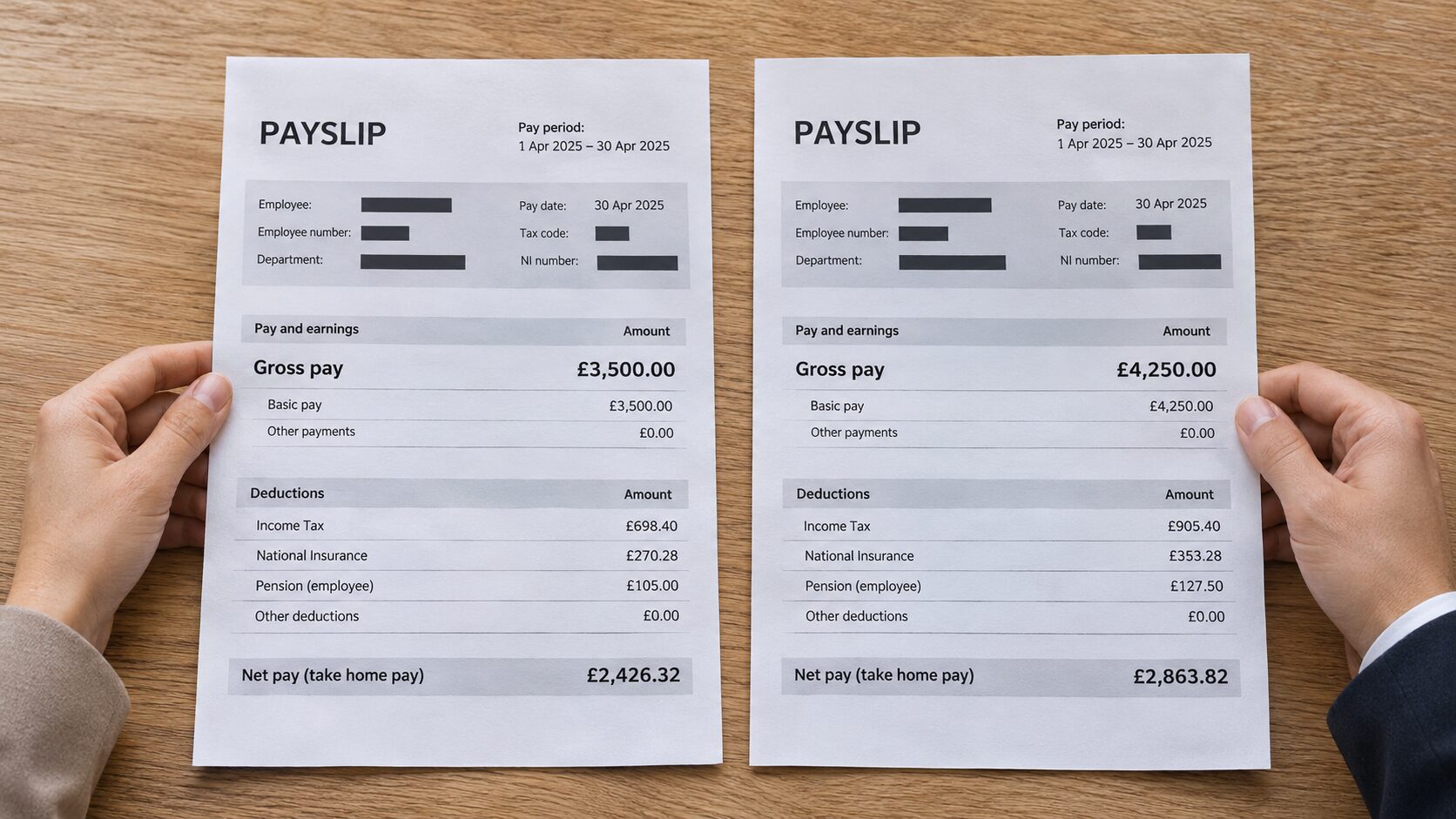
Employees already have the right to discuss pay in certain circumstances. Now, Britain’s equality watchdog wants to go further, giving workers greater access to the information they need to challenge potential pay discrimination.
Under current UK law, employees can discuss salaries to investigate potential discrimination, but they cannot generally require their employer to disclose a named colleague’s pay. Following the Equality and Human Rights Commission (EHRC) call for stronger pay transparency measures, the Government announced on 10 November that it was planning to introduce legislation requiring employers to publish pay information in job advertisements or provide it in writing before an interview where no advertisement is used.
For employers, this signals a shift towards greater scrutiny of how salaries are determined and whether differences can be justified.
Can employees discuss their salaries at work?
Section 77 of the Equality Act 2010 protects pay discussions by an employee where the purpose is to establish whether differences in remuneration may be connected to a protected characteristic, such as sex, race or disability. Employers therefore, cannot enforce contractual confidentiality provisions to prevent these protected discussions, and employees must not be victimised for participating in them.
However, this does not give employees an automatic right to know what a named colleague earns. Salary information is personal data, and employers must comply with UK data protection law when considering disclosure.
What changes to UK pay transparency laws are being proposed?
The Government has confirmed plans requiring employers to disclose salary information during recruitment, although specific legislation and an implementation date have yet to be finalised.
Wider reforms also remain under consideration, including a statutory pay questionnaire that would allow employees to request information relevant to potential pay discrimination. The EHRC has recommended that employers should be legally required to respond. It has also supported prohibiting employers from asking candidates about their previous salary or salary expectations.
These measures are intended to address a common difficulty: employees may suspect unequal pay but lack the information needed to establish whether a difference exists or is justified.
Importantly, the proposals do not currently create a general right to obtain an identifiable colleague’s salary.
What could greater pay transparency mean for employees?
There may be legitimate reasons why employees performing comparable roles receive different salaries, including experience, responsibilities or market conditions. However, in an equal pay claim, an employer must establish that the difference is attributable to a legally valid material factor rather than unlawful discrimination.
By way of example, consider two employees undertaking substantially similar roles. One joins on a higher salary following external recruitment, while the other has progressed internally through annual pay reviews. Can the employer explain the difference? Was the starting salary supported by market evidence? Were progression decisions applied consistently? Greater transparency could bring these questions to the surface much earlier.
How should employers prepare?
My recommendation would be that:
- Employers review how starting salaries are determined, whether pay progression is consistent and whether differences between comparable roles are properly documented.
- The proposed recruitment requirements also make salary bands and advertised pay ranges worth reviewing now, rather than waiting for legislation, and
- Managers should understand the existing protections around pay discussions, and businesses should ensure that confidentiality policies do not restrict employees’ statutory rights.
Greater transparency does not necessarily mean employers must disclose everyone’s salary. It does, however, mean businesses should be prepared to explain how remuneration decisions are made.