What Is a Caveat and When Should You Use One?
When someone dies, their estate is usually administered by applying for a grant of probate (if there is a will) or letters of administration (if there is no will). Once a grant is issued, it gives legal authority to the people named in the grant to deal with the deceased’s assets. This includes collecting in those assets and distributing them to the legal heirs of the estate.
A caveat is a formal notice lodged at the Probate Registry, which prevents a grant from being issued. It is used where there is a dispute or concern about the validity of a will, or a disagreement about who should administer the estate.
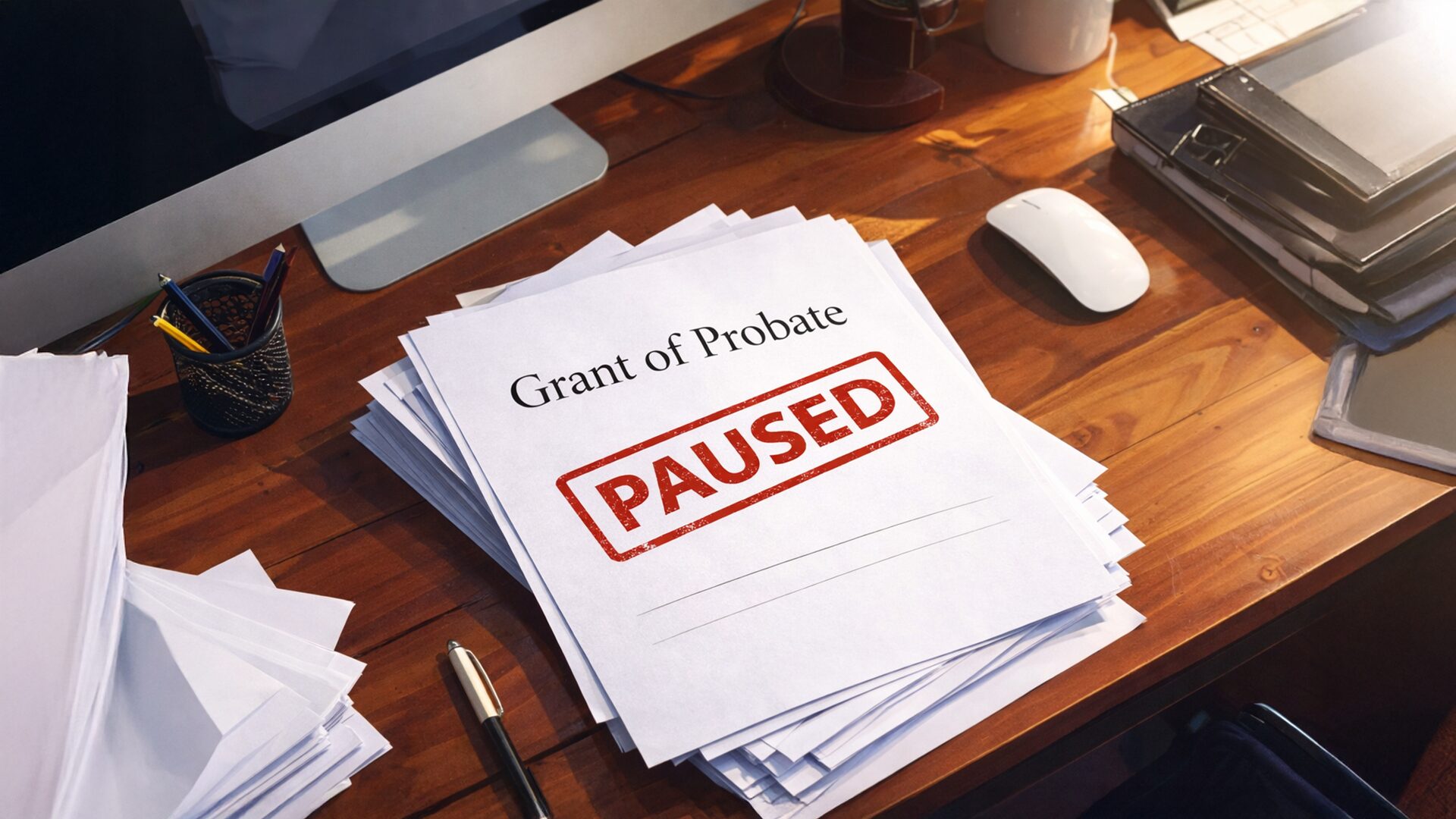
In simple terms, a caveat puts the probate process on hold while issues are investigated or resolved.
When Should a Caveat be Used?
Common reasons for entering a caveat include:
- Doubts about whether the will is valid, including for lack of capacity or undue influence.
- Discovery of a later will or wills.
- Disputes over who is entitled to apply for the grant, including concerns about the conduct or suitability of the proposed executor or administrator.
A caveat is not appropriate for disputes under the Inheritance (Provision for Family and Dependants) Act 1975 and lodging a caveat in those circumstances or simply because you disagree with a will or an executor/administrator without good reason is an abuse of process that could have cost consequences.
If in doubt, you should seek professional advice as to whether a caveat is the appropriate step.
What Does a Caveat Do?
Once entered, a caveat:
- stops the Probate Registry from issuing a grant;
- lasts for six months but can be renewed; and
- applies to all applications for a grant relating to that estate.
While a caveat is in place, no one, apart from the person who lodged the caveat, can obtain probate until the caveat is removed.
How Do You Enter a Caveat?
Caveats are relatively inexpensive and straightforward to enter.
You can lodge a caveat for £3:
- online via the government website, or
- by post using form PA8A.
You will need:
- the deceased’s full name;
- date of death;
- last known address; and
- your own details as the caveator.
You do not need to explain your reasons when entering the caveat.
What Happens After a Caveat Is Entered?
If no one challenges the caveat, it simply remains in place for six months and can be renewed indefinitely.
If someone wishes to proceed with probate, they will seek to remove the caveat by ‘warning’ it. In order to protect a caveat against a warning, the person who lodged it must ‘enter an appearance’ to protect it.
‘Warning’ a caveat and ‘entering an appearance’ are procedurally complex steps requiring affidavit evidence, which must be filed and issued by the relevant district probate office. Therefore, professional advice must be obtained promptly if your caveat is warned. If the strict deadlines are not adhered to, or there are errors in the warning or appearance, then the caveat in question could be removed.
If solicitors are instructed in a probate dispute, it is always recommended that they renew or take over the management of a caveat to ensure deadlines are not missed and all correspondence is sent directly to them. If a caveat is inadvertently removed, then potential probate claims can be significantly weakened as the executors or administrators can apply for probate and distribute the assets. To protect a probate claim without a caveat, expensive and risky injunctions may need to be obtained to secure estate assets.
Once an appearance has been entered, a caveat can only be removed by way of a Court order. Therefore, if a party has entered a caveat incorrectly, there could be significant cost consequences.
Conclusion
Caveats should not be used lightly. Inappropriate or tactical use can delay estate administration unnecessarily, increase legal and administration costs and expose the caveator to adverse cost consequences if proceedings follow.
Ultimately, a caveat is a protective tool, not a weapon. Therefore, although it is easy and cheap to enter a caveat, legal advice should be sought as soon as possible, because caveats can quickly become complex and costly. However, when used correctly, they are essential to pursuing a successful probate claim.